Showing posts with label interview. Show all posts

2/01/2020

Interview: 'Bad Hair' Director Justin Simien On Horror Influences, Telling Black Stories, And Someday Directing An X-Men Movie


After the success of his racially-charged debut feature Dear White People, Justin Simien could've easily given us more of the same. But what's the fun in that? Simien returned to Sundance this year with Bad Hair, a horror satire set in the 1980s New Jack Swing era, a time of stylish fashion, big hair, and a culture that equated both with impossible beauty standards.

The story follows  Anna (Elle Lorraine), an aspiring VJ who is told her path to success is through her hair, but after a devastating scalp burn as a child, she has always gone natural. When Anna gives in and goes to a mysterious hairdresser to get a weave, she comes to find that her brand new hair has a thirst for blood.


It's campy stuff, for sure, but race does remain integral to the story Simien is telling. Not only does Simien touch on the black culture wars that pit black women against one another, but a system that encourages such in-fighting to hold them back.  I had a ton of fun with it, and apparently so did plenty of others. Confirmed is a lucrative $8M deal with Hulu that promises Bad Hair will get a theatrical run. You can check out my review of the film here.

I was fortunate to sit down and speak with Justin Simien while attending Sundance. It was my second time talking with him, and we discussed how things have changed for him since Dear White People. We also talked about his inspirations and influences on Bad Hair, including the 2005 Korean horror film The Wig, which happens to be the only one of the hair horror genre I've seen. We talked about black beauty standards and the impact they've had on women for ages, and how our obsession with hair makes for a perfect starting point for a genre film such as this.

Our conversation started with the two of us geeking out over our mutual love for the X-Men comics, and Simien's desire to someday direct a movie featuring Marvel's favorite mutants. If he can get Bishop to be the star of it, even better.

Listen to my Bad Hair interview with Justin Simien below!

Listen to "Sundance: Justin Simien on 'Bad Hair', Telling Black Stories, and the X-Men" on Spreaker.

12/24/2019

'1917' Interview: Sam Mendes And Krysty Wilson-Cairns On Their Groundbreaking War Film


World War I doesn't often get its due on the big screen, but Academy Award-winning director Sam Mendes and writer Krysty Wilson-Cairns change that in a major way with 1917. The groundbreaking war film stars George MacKay and Dean-Charles Chapman as soldiers sent on what amounts to a suicide mission, to cross the dangerous No Man's Land and prevent British troops from rushing into a German trap. If they fail, nearly 2000 troops will be slaughtered, including the brother of one of the two men.

Based on stories Mendes was told by his grandfather, 1917 is both intimate and sprawling, putting you there on the frontlines and into the trenches of war too big to fathom at the time. This is no ordinary story, and Mendes and Wilson-Cairns devised it to be shot in an extraordinary way. With the aid of the great cinematographer Roger Deakins, the film was shot in a  single continuous take, a grueling technique that pays off in a visceral, thrilling experience.

I had a chance to talk with Mendes and Wilson-Cairns about 1917, their decision to shoot in a single take, her apparent WWI geekdom, and the trajectory of Mendes' directing career. He talks about starting off with his Best Picture-winning American Beauty, and the influence his experience in the James Bond franchise had in choosing 1917 as his next project.

1917 is in theaters now. You can check out my review here and listen to the interview below!

Listen to "1917: Sam Mendes And Krysty Wilson-Cairns On Their Groundbreaking War Film" on Spreaker.

12/23/2019

Interview: 'Spies In Disguise' Directors Nick Bruno And Troy Quane On Their High-Flying Spy Comedy


In the new film Spies in Disguise, spy Lance Sterling (Will Smith) is the greatest spy in the world. Hunting down bad guys with panache, slight arrogance, and every high tech weapon imaginable, he is thrown off his pedestal when he is set up for a crime. Now forced to team up with passive tech guru Walter Beckett (Tom Holland),  more focused on safety and feelings than tech brilliance, Lance must learn to work with others and that the world is not as black and white as it seems. Also, he gets turned into a pigeon throughout the process.

I sat down with Directors Nick Bruno and Troy Quane to discuss the process of animating Washington D.C., working on their first animated feature and the complex lessons embedded in the film’s message. 

I was doing research on both of you and you guys are like very experienced and seasoned animators, but this is your first directing venture. How was it jumping in and adapting this short film into a full-length feature film?

Troy Quane: It was amazing. It was such a great experience. Like you said, we've worked on so many films and you can't help every film you work on you go, "Oh, I would've done this, or Oh, I wish I could cause I would've done that." And then all of a sudden someone says, "All right, do it." It's exciting and it's amazing. And we got to make a spy movie, which is like our favorite type of movie. How cool is that? We get big action set pieces, adventure, car chases. But then the other side of it is we love comedy. We love to laugh and make each other laugh. So we also got to make a buddy comedy. This odd couple of Lance Sterling, the world's greatest spy and Walter Beckett, this gadget guy, who do not see eye to eye at all, going on this adventure. So all the comedy comes from that, and then on top of all that, we decided to turn him into a pigeon, which is just insanity. So it was great. It lets you take all of that experience you've had, all those things you've seen, the ideas you've had and put them forward and to a film and into a story you love.

Nick Bruno: Yeah. Listen, I totally agree with all that stuff. The only thing I would add to that is, you know, when you first start, you're excited and you're also a little nervous, right? Cause you're like, "I'm making a spy movie and I hope this is good." And you know, we really want to be good at what we do and it's been an amazing learning experience. You know, you work for four years on a film, it comes out and after a couple of weeks it's, it's gone. Well, hopefully not gone. It's really about the experience and who you work with. And I feel incredibly lucky to have been working with Troy. It's a great partnership.

T.Q.: I love you man.

N.B.: Thank you, dude. I love you too. And the people at Blue Sky Studios, it's like whenever you're nervous, you know, if you're surrounded yourself with amazing people, it's amazing what shows up on the screen and I feel very proud of what everyone's accomplished on this film.

This actually leads perfectly into my next question. Thank you for making my job easier! I feel like it's easier when you're about to do something new if you're doing it with someone else. Talk a little bit about your guys' relationship and how it was to work on the film together.

N.B.: You know, what's interesting is when we started, we had never met each other before this. We had both read the beginnings of the script respectively. And you know, we both liked the idea that it's a spy movie and it had a lot of potential for humor in there, but there were also the seeds of a very important message. And I think it's that message that brought us together as being the guys that were going to make this film. How in a world that doesn't trust each other, like the world of espionage, it's really about putting your opposing philosophies away and learning to work as a team and teamwork can really save the world. And knowing that this might be a kid's first spy movie, it was like, "Man, there's a big responsibility to say something important with that." I feel very proud of that message.
T.Q.: Yeah. I mean it's amazing to meet someone, cause it's nerve-wracking. Directing a movie is about having a vision or having something personal to say. So to find someone who you share all those things with was as amazing. Cause we have a friend, a mutual friend who kind of knew me, knew him and knew that to that we would work well together. But I think we came together even better than anticipated. I mean we share the same sense of humor, the same story instincts. We're both animators. So performance-wise we have very similar tastes and it's a long journey and it's nice to have someone you know, you really respect and have fun with to go on that journey with it. It really was life imitating art, in the sense of teamwork and coming together. A lot of times directors, especially in animation when they are paired together, it's "Nick's from animation. I'm from story, so you go handle all this half, and I'll go handle this half and we'll see you at the premiere." But that's not how we worked at all. We did everything hand in hand. I mean literally, although some days, but we really did do everything together all the way through. I think the movie feels more seamless because of that.

One thing that I loved was when Walter says, "People are people," the idea that people are not all good or evil. You don't see that in kids' movies or kids' media in general. Often characters are portrayed as all black, all white, good, evil, the lines are drawn. Why is this message really important for kids right now to get?

T.Q.: Cause it's I think it's really where the world is right now. Put kids' media side. It's in adult media. I mean it's, "you're bad, we're good." And unless you switch the perspective around and then you realize they have the same perspective on anything. And that's why it just felt like the right idea for this movie. And it's a complex idea for sure. But you realize there are no real villains. Everyone's a hero of their own story. Everyone's doing something because they feel it's the right idea. And that's why it was really important for Lance, our hero, that you get to have fun with him at the beginning and cheer for him. Cause he's the good guy, and then "Ooh, boo there's the bad guy." But then at one point, you twist it around and you realize these two characters are really just opposite sides of the same coin. And the only thing that separates them is a point of view. Walter, when he says, "there's no good people, there's no bad people." He's not saying there's not bad in the world that we have to deal with. There is, but when you break it down and realize that everyone is a person and that person's connected to another person, so many more of our problems go away instantly and then we can just focus on the important things that are left. When you have kids, you see them when they're young and they don't come with misconceptions, they're just kids and they see other kids and there are no dividing lines. Those develop as they get older. And I think there's something really refreshing, some people say naive, but I think there's something refreshing in Walter, who has maintained that and realizes that we have fewer differences than we'd like to admit. We tend to create our own differences. I think Walter being true to his convictions is a different type of courage and I hope kids will go see this movie wanting to be Lance Sterling and hopefully come out wanting to be more like Walter.

Oh, man. I taught English and History for sixth and eighth-graders and I always told them that the people who we conceive as bad from history, thought they were doing the right thing at that time. I think this is such a wonderful and refreshing message to have in a kid's movie. We are sitting here talking in Washington D.C. and D.C. is heavily featured in the film. Talk me through the animation process of creating Washington DC.

N.B.: When we first started the film, we decided instead of just guessing what D.C. really is, we decided to come down here. We spent a couple of days just walking around, getting, not just a feel for the landmarks, like actually experiencing them and just also just the people and the entire geography of the entire place, going to the spy museum. It really is so important to do our research because with this movie we didn't want it to be a spoof. We didn't want it to be a cartoon. You know, we're turning a man into a pigeon, which is ridiculous as it is. So we really wanted to have a grounding to our universe and you know, while we were down here we thought it be really cool to set this spy agency underneath the reflecting pool. My kids actually asked me after the movie, "Is there really something under there?"

T.Q.: The hidden in plain sight, which the idea of the pigeon, right? Like is that a pigeon? Is that a spy? Is that just the reflecting pool? It really was finding all those details, the fire hydrants and the light posts and making sure that it felt unique. And same with Venice, because we didn't want to just say, "All right, we create a city and this is D.C. And now we're going to change all the signs to Italian and now its Venice." We want to make sure that they each had a personality and a character, cause that's the fun of these spy movies. You feel like you're going somewhere different. You feel the personality and the character of the environment as much as the characters within it.

The one thing you've got wrong was the traffic, the traffic's awful here.

N.B.: I know! It's hard to have a car chase with traffic so we cleared out the streets.

If it was realistic the spies would just be bumper to bumper for two hours, and no one wants to watch that.

T.Q.: It would just be a pigeon running on the street!

11/29/2019

Interview: 'The Two Popes' Writer Anthony McCarten On His Holy Netflix Drama


If you're an actor looking to win your first Oscar, just call up Anthony McCarten and he'll get the job done for ya. McCarten's screenplays for Darkest Hour, The Theory of Everything, and Bohemian Rhapsody led to Best Actor victories, and some are already predicting the same for his latest, The Two Popes.

Starring screen legends Jonathan Pryce and Anthony Hopkins, The Two Popes centers on a unique moment in time, as Pope Benedict prepares to step down and pass the torch to the future Pope Francis. No one has resigned from the papacy in hundreds of years, and McCarten imagines a spirited, lively debate between the two ideologically-opposed men of God.

Along with my friend and colleague Tim Gordon, I had the chance to talk with Anthony McCarten about The Two Popes, his approach to screenwriting, possible future ideas, and what his recent acclaim means to him.  You can listen to that interview below, and check out my review of The Two Popes here!

Listen to "Conversation with THE TWO POPES Writer Anthony McCarten on His Holy Netflix Drama" on Spreaker.

11/27/2019

'Waves' Interview: Trey Edward Shults, Kelvin Harrison Jr., & Taylor Russell On Their Searing, Tragic Drama


By now you've likely heard the rave reviews buzzing for Waves, the third feature film from writer/director Trey Edward Shults. His career took off with the family drama Krisha, followed by the horror It Comes at Night, and Waves follows a pattern of following families in a unique state of crisis. This particular story is one that has been coalescing in his mind for years, even before his breakthrough debut, and all it took was the right timing, the right situation, and the right people to bring it together.

Two of those people who were integral to making Waves a reality are its two youngest stars: the red-hot Kelvin Harrison Jr., who worked with Shults on It Comes at Night, and Taylor Russell, whose career is also taking. They star as siblings in a black South Florida family who feel the unique pressures that come with being successful people of color. When that pressure becomes too much for one to handle, it leads to a tragedy that threatens to tear the family apart. 

Alongside my colleague Tim Gordon at the Middleburg Film Festival, I had the chance to talk with Shults, Harrison, and Russell about Waves, and the very personal chord it struck with each of them.  You can listen to the interview below, and check out my review of Waves here. The film is in theaters now and expanding nationwide. 

Listen to "'Waves' Interview: Trey Edward Shults, Kelvin Harrison Jr., & Taylor Russell On Their Searing, Tragic Drama" on Spreaker.

10/31/2019

Interview: 'The Laundromat', Scott Z. Burns And Jake Bernstein On Finding Humor In The Panama Papers Scandal


How does one go about making sense of one of the biggest financial scandals in history, one with numbers so big we literally can't fathom them? It would be hard enough for an economics professor to unwrap in a way for regular folks to understand. But what about a screenwriter with the daunting task of making it into a movie? That was the burden faced by Scott Z. Burns, who adapted Jake Bernstein's book on the Panama Papers scandal into Netflix's film, The Laundromat.

What's interesting about Burns' approach is how much it differs from what he did on Steven Soderbergh's The Report. Both movies that take a deep dive into the murky depths of corruption and illegality, only The Laundromat is a screwball fourth-wall-breaking comedy. It's an unusual path to take, especially since it veers so wildly from Bernstein's serious, deeply-analytical novel.

I had a chance to talk with Burns and Bernstein about their approach to The Laundromat, and what made them decide this was the best means of delivering so much information to the film's audience. You can listen to my interview below, and check out my review of The Laundromat here!

Listen to "Interview: 'The Laundromat' Writers On Finding Humor In The Panama Papers Scandal" on Spreaker.

Interview: 'Harriet' Director Kasi Lemmons On Doing Justice To Harriet Tubman's Story


It's hard to believe that Kasi Lemmons' Harriet is the first major feature film about legendary abolitionist, activist, suffragette, and spy Harriet Tubman. How is that possible? Why did it take so long for Tubman's story to finally be told? And what roadblocks, if any, did Lemmons face in making this film a reality?

Harriet stars Tony Award-winner Cynthia Erivo as Tubman, but don't go in expecting the usual tale of her time as a leader in the Underground Railroad. Designed almost like a superhero origin, it looks at her deep commitment to family, justice, and the faith that helped her lead so many to freedom.

I had a chance to talk with Kasi Lemmons about her work on Harriet and the responsibility she felt in bringing her story to the big screen.  You can listen to that interview below, and check out my review of Harriet here!

Listen to "Interview: 'Harriet' Director Kasi Lemmons On Doing Harriet Tubman Justice" on Spreaker.

10/20/2019

Middleburg Interview: Daniel Jones, Subject Of 'The Report', On The Depiction Of Torture And The Influence Of Government Agencies On Media


Hollywood and the U.S Government have had an interesting intertwining history. From films advocating for American involvement in World War II to The Hollywood Blacklist during the Red Scare to its advocation for gay and human rights, the push and pull between these two fundamental American institutions have shaped our perceptions of our country and our culture. In the new film The Report, this relationship is once again explored, in an attempt to right the wrongs by the CIA during the Iraq War, in regards to torture as an interrogation tactic. Based on a true story and an actual document set to be released in November, the film follows the Senate investigator Daniel J Jones (Adam Driver), looking into the questionable strategies and tactics used by the CIA, to extract information from suspected terrorists and those in connection with Al Qaeda.

After speaking with an audience at the 2019 Middleburg Film Festival, I sat down with the real Jones to discuss his involvement in the film, government agencies manipulating media, and how The Report holds those responsible for great acts of torture accountable. 

How much involvement did you have with the making and the creation of this film?

So, I mean, my job in the film, and like this was basically like a nonprofit endeavor, nobody like made money from this film, was to do facts. It was really important to Scott (Burns, the director) that he's taking a declassified 525 page report with redactions and getting THAT right. Scott wanted to tell the story of that Senate report and he kind of just used me, as an investigator who was involved in that, as like a sort of a tracer bullet and through the story. Because it was about getting that report to a larger audience and getting the facts right, I was the person he would call on those things. And I also put him in contact with senators and other staff and people at the CIA. So I also serve as somebody who could connect him to other people. So we didn't have to rely on me. He could talk to other people.

Did he talk to Senator Dianne Feinstein?

He did not talk to Senator Feinstein. He talked to Senator Whitehouse, Senator Udall, Senator Levin. I believe he spoke with Senator McCain's people. There was a Harvey Milk movie and [Senator Feinstein] also was sort of hands-off that endeavor as well, which I totally respect. Her schedule is just nuts. You know, Scott did talk to her staff and it was her staff that connected Scott and I.

In your Q and A here at Middleburg, you mentioned that Scott was very particular about the language used in the film. Can you talk a little bit about your involvement in the script? Was it Scott asking you, "Is this the right word?" or was it more than that?

Well, you know, this film started as a dark comedy and there's actually a couple of leftovers in it. The scene where the Bruce Jessen character (one of the psychologists responsible for advanced torture methods, such as waterboarding) says, "I've been involved in actual simulations,” which I love that line. But there are sort of leftover lines from the dark comedy script, which I never saw the full script of that one. Scott would send me pieces. "This is the arch of what I'm thinking about doing," and I actually didn't realize he was focusing so much on "the investigator," me in a sense, until I went out to Sundance. Even though I had seen pieces of the script and I'd seen dailies and I'd been on the set. As a kind of an investigator researcher, you turn off part of yourself, right, and you focus on some of the intellectual sides. So I was always here on the intellectual side with him. I mean, it wasn't until Sundance, "Oh, this is about me."


In the movie, there's this really interesting scene where you, played by Adam Driver, are watching a news report about the film Zero Dark Thirty. Later there's this whole speech given about the television show '24' and how the American people perceive news and perceive torture, but then consume it through media. Can you talk a little bit about how the public perception of news and entertainment impacted the possible release of the report?

Well, I mean, one of the reasons I wanted to engage with Scott on this was there's this dry Senate report and there were news articles about that report around the world for 24, maybe 48 hours, but then it's just gone. And if you've read the book Sapiens, the history of, sort of, Homo sapiens, It stresses that what makes us different is the importance of narrative and storytelling and that permeates culture. And in the same way that Hollywood has had, in my view, a profound effect on really wonderful things, you look at the issue of gay marriage, there's this really profound or positive impact. But in the case of torture, it's been one of these things mythologized and Hollywood-ized, largely because it's a great device to move things along quickly, right? Nobody wants to watch a three-day-long interrogation where someone talks about their family and like eventually gets this thing. It's like, "Okay, let's, you know, twist their arm and then we get the information and we run off." It just simply doesn't happen. And Zero Dark Thirty is an interesting case. I happen to know Mark Boal who wrote that movie and there was quite a bit of research done on that. Mark Boal had actually reached out to the agency to do a book about a CIA failure called Tora Bora, Osama Bin Laden's escape and the CIA said, "Hold on, hold on. What if we gave you exclusive access on something that we did do positively?" And you know, that was the same classified story the CIA was telling the White House, Department of Justice and Congress, it just happened to be wrong. So, they were victims of the misinformation as much as anybody else, until our report came out. So I don't fault them in this case.

It's interesting that they used Hollywood as this tool, when there is that political narrative that the Hollywood elite are trying to change and make things more liberal. But in reality, there's been evidence of the opposite.

Oh yeah. The agency has a very aggressive Hollywood campaign. And it's basically propaganda and they're pushing out their story. I mean, there's a footnote in the report. The UBL operation (the mission where Bin Laden was killed) happened in May of 2011. In March of 2011, and this was a program that was highly compartmentalized, they brought in their public affairs shop to push out to the American people the importance of the detainee program in the capture and the operation that led to Bin Laden's death. And of course, it was all wrong.


At the end of the film, it states that there really were no charges brought to those involved in the torture at the CIA. Do you think that The Report is in its own way holding them accountable?
What a wonderful statement. Yes, absolutely. No, I couldn't agree more. You know, this is some form of accountability, getting this out. Just documenting this for history as a form of accountability. Now they did everything they could to avoid it, and that is taking out the names of people who aren't even classified. They made us take out names of people who are in public positions at the agency. But nonetheless, getting this story out is some form of accountability. Getting everybody who watches this film, is a part of that accountability chain. You know, it's the report itself. Getting eyeballs on that is really important, and the film will lead people, I hope, to that actual book, to ensure this doesn't happen again.

What do you hope is the legacy of this film?

There's two big things in the report itself that I thought were massively important. One is we basically did the largest investigation ever, into the use of torture and it's effectiveness. We went through 6.3 million pages about people being tortured and we documented that. The ineffectiveness, right? It produced false answers. These are things people knew, but we've done it in a way that no one else has. So we thought it was a lesson, not only for the United States, for people who want to do this, but actually a lesson for the world. If you're in North Korea and China, you want to torture people, you can torture people, sure, but don't go into thinking that you're using it because you're going to get accurate information. So we thought it could have a global impact. That's one. The second part is just the amount of misinformation and inaccurate information that the CIA was providing to Congress, to the Department of Justice, and perhaps most importantly, the President of the United States. Why do we believe that the inaccurate information that the CIA was pushing to those institutions about the torture program, is any different from some other program they're involved in? And to me, it still hangs in the air why people haven't made that connection. So those are the two things that I think are really big, and I hope that the film, again, drives people to the report and drives people to think about this in a constructive manner.

The Report is in theaters on November 15th.

9/13/2019

Interview: The Creators Of 'Unbelievable' Talk About Depicting Hope After Sexual Assault


In the midst of the ever enduring #METOO movement and as the horrors of the Jeffery Epstein case come to light, Netflix’s Unbelievable cuts through that reality with a true story of its own. One of  hope, survival and determination, it intertwine two tales, the first of Marie (Kaitlyn Dever), a survivor of rape whose story is dismantled and ultimately dismissed by police and those around her. The second of two detectives (Toni Collette and Merritt Weaver) determine to catch and prosecute one of the most evasive and brutal rapists in American history. The eight episode miniseries, out this Friday, is helmed by three dedicated creatives, producer and showrunner Sarah Timberman, writer, showrunner, and director Susannah Grant, and director and producer Lisa Cholodenko. Cortland Jacoby had the opportunity to sit down with the team and talk about the intricacies of making a project like this and the impact they hope it leaves behind.

I know that it was based on a Pulitzer Prize winning article, which I read. How did this project come about? How did you guys get involved and, and who came on first?

Susannah Grant: A bunch of us dove in and once the article is published, I read it pretty immediately and sent it as soon as I'd read it to Sarah, we'd collaborated many times, I knew She would be a great collaborator for it. At the same time, Michael Chabon and Ayelet Waldman sent it to Sarah, so she was getting it from multiple directions.

Sarah Timberman: I didn't need to be talked into it from either side because this piece is extraordinary. Then we discovered that Katie Couric was also interested in it. So she joined our group and we all shared a passion for it, brought it to CBS studios and Netflix, both of which jumped out at immediately having no hesitation at all.

SG: And you know, I called about it at 10 o'clock one morning and by after lunch Netflix said we want this, what do we need to do? This was all in 2016, before #Metoo.

Had Trump's "pussy tape" come out yet?

SG: Yes. Pussy grabbing had happened and it was before the Women's March. Okay. So there was a mood in the air. To the credit of a lot of people, there was immediate support for it and interest in it, which we found heartening especially in that moment.


Speaking of interest, this cast is amazing. You have not only Toni Collette and Merritt Weaver who like are pros in the industry, but you've got Danielle McDonald and Kaitlyn Dever-

SG: Bridget Everett, Elizabeth Marvel, Eric Lange-

Exactly! Casting for something like this, I feel like it's really important because you need to have a face that's familiar enough but also comforting, but still fresh enough that can lead the story on. How important was finding the right person?

SG: Lisa has an extraordinary taste in actors and brought a fantastic casting director into the mix who worked with her a lot named Laura Rosenthal.

Lisa Cholodenko: Yeah, I mean Laura is amazing. We've done three things together and so you guys knew of her and we started with her and that was a great beginning. And you know, it's always like a funny process. Like you've said, you want somebody who maybe has some recognition but you want the best people for the right job. We talked a lot, put up pictures, we did a little mixing matching and just went through it in a really in a methodical way. We came up with these amazing two leads and then Kaitlyn came in and kind of blew us away.

The show obviously has some super heavy subject matter that it's not sugarcoated at all. It's got be hard to kind of live in that world for months at a time while shooting something like this. What kind of environment was created on set to kind of relieve this tension?

SG: I thought going into it that it was going to be more difficult writing it and living with it than it was. I don't know if it has to do with just sort of the cathartic nature of really looking at something that's real and the relief of looking something strictly straight in the eyes. But I wasn't tortured by it and it was a very professional environment. You know, there were a few days when we were doing really sensitive scenes. Lisa shot most of the sexual assault scenes, but most days were regular professional days. With people working hard and then relaxing when they need to relax.

LC: Yeah. I mean, I think those days were kind of exceptional. You clear set and Blake Ellis, who played the rapist was actually a lovely guy and a team player and really cared about being sensitive with Kaitlyn. And you know, I didn't have to give anybody a pep talk. We all knew and the set was closed and the essential people were there.

Was there an intimacy coordinator? I know that some shows are doing that now.

SG: No, there wasn't.

LC: No, I mean I think we spent time talking about it quite literally and kind of going through logistically. "This is what we're going to do. This is how we're going to shoot it. This is what we're going to get to this." So everybody knew what was coming down the pike when we'd get there during the day, and how we would do it.

SG: But you know, we thought a lot. Do you need to show the sexual assault, was a question early in the script and I thought, "yes we do." And then, "What do we need to see and why do we need to see it? And from whose point of view? Why is this important to see and let's only see what we need to see." So you know, Lisa's shot list was probably not that long for those scenes, right? You were so specific about what you show.

LC: You know, it was a really interesting layered story. I think we were kind of balancing two things, which was information that could be used in narrative to sort of demonstrate or show the incredibility of her memory. So we would sometimes shoot things from different perspectives or two different ways or something different than what she had said before. So there was a little bit of minutia but I think we ended up stripping it way down and realizing less is more in a sense and the power of the performance was communicating alongside with these visual elements and that they were working in concert. So it became really clear as we went along like how much we actually needed and how we should do it and where it would come up as she reveals what happened to her.

 SG: We had a great consultant on it, who was onset pretty much beginning to end every day who has done this work from the law enforcement side, worked in the sheriff's Department for 15 years, Liz Devine and she was a real go-to source for how depict some of this.

You guys have a really hard job of balancing true events with heavy subject matter but also telling a cinematic story that is worth watching. Those elements could easily contradict each other. You're dealing with something that actually happened, so you want the credibility and authenticity, but this isn't like a robbery or crime story. This is rape, what I consider the worst crime that a person can commit, but you also have to create something that's engaging and thought provoking. Talk to me about your method of juggling all those elements to tell one cohesive story.

SG: Well, I mean, you can have all the best intentions in the world and if you're not telling a good story, you're going to be telling it to no one. This story came with a really compelling narrative baked into it, so it really, we didn't have to create that. We had to sculpt it for this format, which is a different format than a book and an article. It was so present we didn't have to enhance it. We really just had to honor it and make it fit the architecture of our form. Because it was so propulsive, because you just really want these women to find this guy, I felt like it afforded us the room to take a breath and take a little more license in our storytelling and have moments of silence and have moments where we show an unexpected emotional aspect of this process. It was really kind of the luxury out of what the story gave us and gave us so much dramatic storytelling that it gave us a lot of room to explore.

ST: There's inherent suspense, I think, in hoping that those two stories, the two sides of the narrative, will connect.


Speaking of the two sides of the narrative, can you talk about the differences between in portraying Marie's story and the investigation and sort of what if you had like different goals there or different strategies and in creating, not only the story but also in the filmmaking aspect of it.

LC: You know, they're separate at first. So it's the setup of this woman that really hooks you, like this visceral gut wrenching thing had happened to her. I think that that's like the jump ball to really get behind these two women that come on the beat and crack this case.

ST: There's a very different energy and pallet that you established.

LC: The pallet was really important. It was about the place, Marie's character was in Washington state and I felt like the environment was cold, it was gray. It was isolating, it was difficult. And we get to Colorado and it's warmer. It's hopeful. But yeah, I think that my approach to it was more in your face in a away with Caitlin and that first episode to kind of enhance the reality of it and the kind of terror of it. For as restrained as I wanted to be, that was an objective as well. I just wanted the experience of her terror to sync her face, not in the recreation of what actually happened.

SG: I think the thing that I found so moving when I first read the article was the idea that there is this one young woman who is like slowly drowning in her life and just trying to keep her head above water. Hundreds of miles away, there are these two people who are working so hard and they don't even realize that what they're doing is building a lifeboat for somebody else. That just moved me so much. So in terms of how you build the eight episodes, I think that was always in my mind that that's the story that we're telling is, is that movement toward each other. And I think that helped to sort of stitch it all together.

The article kind of closes Marie's story a little bit more fully than the show. I would say you end on like a hopeful ellipsis, but there isn't that closure of Marie confronting her foster family or talking to her friends or her program that like let her go. There is this moment of, "I want to just move on with my life and start over." Talk about why you chose that kind of ending for Marie's ending and what effect that would have on the story and the viewer?

SG: It felt like the most important thing for her to close out was the story with the guy who had caused all her struggle in the first place and rather than have her sort of resolve with various other people. What felt important for our story was to resolve the primary relationship that caused her so much pain. Um, and it wasn't meant to feel like, "Well, she's tied up all those other relationships." You know, we didn't really want to do that.

 What you guys do really well is getting the audience's heartbeat is on the same wavelength as Marie's when you're with her. I felt like that was such a realistic ending of like sometimes you just have to leave and move on with your life and not get the closure that you need or deserve. Finally, what is the one thing you hope audiences take away from the show?

SG: Well it's something that isn't talked about enough. You know, the fact that this is an absolutely devastating crime, which we hope we make clear, and it's underreported to a staggering degrees. And of those underreported, only 5% of the rates that are reported are prosecuted. So, I mean a bigger conversation would be great.

ST: I would agree with that. And I would hope for other people to have the kind of reaction that my son had when he saw it and then subsequently heard of a rape on campus involving people that he knows. And I think he responded to, he heard very differently. I'd like to think that the show informed his response to what he had heard and what he did about it and how he thought about it, you know? So I hope it moves people.

LC: Well, I hope it stands alone. I'll just talk from the entertainment side, as a depiction of something that's been depicted in many different ways, for as long as those things have been depicted on screens, I feel like our efforts were to be original and look at it from a very different vantage point and one, hopefully that'll be, remembered and affecting and lead to these conversations.

ST: I also hope the people involved in this story, the real people involved to feel that we honored their experience.

That's the most important thing. Thank you guys so much for sitting down with me.

Thank you.


8/29/2019

Interview: John Travolta Talks 'The Fanatic' And Being On The Other Side Of Celebrity Fandom


I think it's safe to say we've never seen John Travolta play a character like he does in The Fanatic. Travolta takes on the role of Moose, a socially-awkward horror movie fan in Los Angeles, who has a series of encounters with his idol, Hunter Dunbar (Devon Sawa), that go terribly wrong. It's a timely film directed and co-written by Limp Bizkit frontman Fred Durst, putting Travolta squarely on the other side of celebrity fandom.

Travolta may be a screen legend, but he's not the most public figure at this point in his career. Whether The Fanatic points to a reason as to why, we only begin to brush against in our conversation about the film. Travolta also talks about his approach to playing Moose, capturing his mannerisms and actions, as well as his own self-image after a lifetime in front of cameras. He also gets into working with Nicolas Cage on Face/Off and how his approach on that cult classic still has an impact on him now.

The Fanatic opens in theaters on August 30th.

7/24/2019

Interview: Lulu Wang On Refusing To Compromise On 'The Farewell', Casting Awkwafina, And More


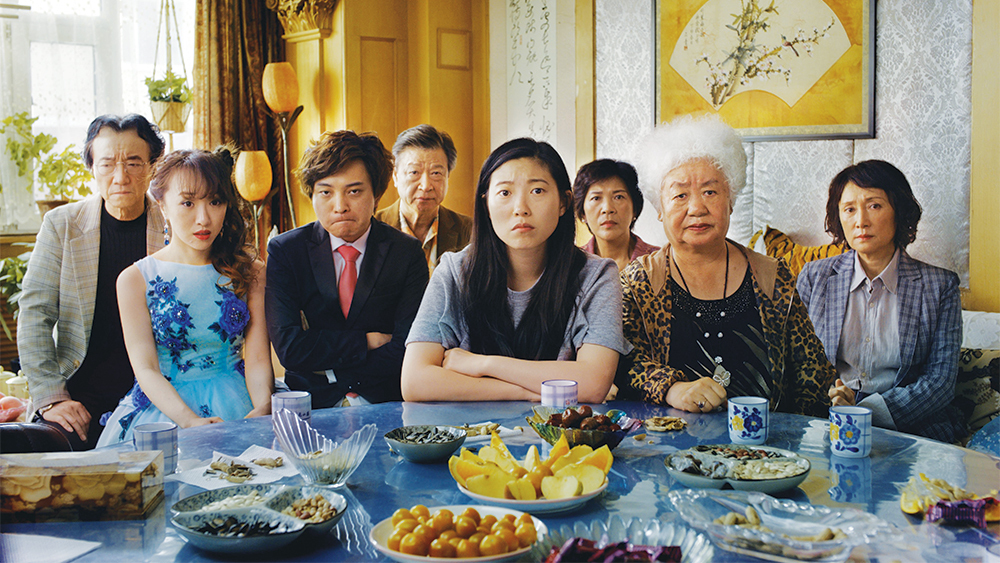
Lulu Wang's The Farewell was the only film at Sundance that left me thinking I'd just seen something special. Movies such as this; a small, intimate story across two cultures and featuring an all-Asian cast, simply don't happen much anymore. They get lost in the shuffle of giant studio movies, or homogenized due to corporate interference, but Wang stood by her guns and made the movie she wanted to make, and thank goodness she did because it's such a breath of fresh air.

Wang's film has a breakout role from Awkwafina, who plays Billi, a Chinese-American who learns her beloved grandmother is dying of cancer. However, her very traditional family have no intention of informing grandma of the news, a decision Billi isn't so comfortable with. It makes for a story that is at times heartbreaking and hilarious, but always rooted in a deep love of family.

I was fortunate to speak with Wang about The Farewell, and discuss the moment she knew this story, which is based on her own experiences, was meant for the cinematic treatment. We also talk about what she went through getting the movie made, and her decision to cast Awkwafina in her first true dramatic role.

Check out my interview with Lulu Wang below, and my review of The Farewell right here!

7/10/2019

Return of The Evil Dead? Rami May Bring the 'Evil Dead' Franchise Back for More


Much like the Deadites that terroize the poor souls of the films in it's franchise the Evil Dead series just won't die, and damn does that make me happy. The awesome folks over at BloodyDisgusting recently sat down with the franchise creator and now iconic director Sam Rami to talk about Crawl, which hits theaters this weekend and was produced by Rami. As is want to happen during a talk with Sam Rami eventually The Evil Dead came up and what Rami had to say was...groovy.
“I’d love to make another one. I don’t think TV is in its future but we’re talking about one or two different ways to go for the next movie” 
While that's far from a confirmation Rami said later in the conversation
“So I think you may see some action on the Evil Dead movie in the next six months" 
So it sounds like this has legitimately been bounded around and could actually happen, and why not? Look, horror is in a good place with thanks to guys like James Wan, Leigh Wannell, and Jason Blum (well, all of Blumhouse really) but the last decade or so has really kept a hard focus on paranormal horror, everyone needs a good crazy demons risen by a satanic book slasher from time to time. The only real roadblock is that Bruce Campbell has announced his retirement from acting following the end of the surprisingly good and woefully under-seen Ash Vs Evil Dead TV show. This doesn't seem to be a big problem for Rami for a few reasons. First, would Campbell really not come out of retirement to play pretend with his lifelong friend one last time? Second, it sounds like Rami has a few possible roads to go down should Campbell not return. The interview mentions thoughts on continuing on in the universe the remake brought to the screen with Fede Alvarez and a few other optoins...they could even adapt some of the characters from the TV show for the big screen.

Campbell and Rami are probably two of the most likable guys in Hollywood...you can't help but to hope for the best things for both of them, personally I just hope what's best involves a ride in that Delta '88 down one last highway to hell. 

'Stuber' Interview: Kumail Nanjiani And Dave Bautista On Working Together, 'Game Of Thrones', And More


In the new action comedy, Stuber, an unassuming Uber driver (Kumail Nanjiani) is forced to serve and protect Los Angeles from a vicious drug lord when a tough but oblivious cop (Dave Bautista) recovering from laser eye surgery hires him to drive him around for the night to crack the case. Are you hooked yet? 
I met up with Nanjiani and Bautista at the National Geographic Museum's special screening of the film back in May to discuss working together and finding this hilarious script. I also chatted with Nanjiani about the final season of HBO's Game of Thrones and his predictions on who would live and die in the Battle of Winterfell episode. Spolier Alert: We were both wrong.

 
Cortland Jacoby:                  First Off, how are your roles different than other roles you've previously had? Kumail you were more into like stand up comedy and Dave you're an Avenger, so how was it coming to set with your different backgrounds?
Dave Bautista:                      It was a bit intimidating. It was kind of a whole new a learning curve from me, but it was something I was really interested in learning and I'm not afraid to put myself in that position, kind of, you know, be a student and be willing to learn. But, um, it was a little intimidating.
Kumail Nanjiani:                 Yeah. I'd never done an action movie. And so I honestly didn't even understand that I should be intimidated because I'd never thought about what like "action acting" is until I was on set and I was like, "Oh, this is really hard and I have no idea how to do it!" But it was really, really fun and you know, Dave is so good at it. So I learned a lot watching him and I really want to do more of it.
D.B:                                      I was excited to watch him kind of do it. I knew he was excited about it. He was getting worked up and it was Kinda cool just to witness that.
K.N:                                      I was trying to just keep up with him and eat what he ate!

C.J:                                       How was it working together? You guys have great chemistry. How was that feeding off each other's energy?
D.B:                                      It was great. It was easy. It was natural. Yeah.
K.N:                                      Yeah, what was great was we both approach acting very differently and we're playing very different characters, but we just worked really well together right off the bat. Before doing the movie, I was nervous of certain aspects of that, but never us together because we didn't really know each other before shooting. We'd auditioned together, but I'd heard wonderful things about him through a mutual friend and I was a big fan of his, so I knew we were gonna work well together. I just didn't realize how well it was gonna work. I mean, we just had the best time. Every take felt different in an interesting way. I had a great time.

C.J:                                         What drew both of you guys to the project?
D.B:                                        For me it was, it was the script and it was Kumail, you know? I was told about the project and told the premise of it. Then I was told that they wanted Kumail to play Stu. That's what interested me right off the bat. Then when I read the script, I found myself laughing out loud, which is, you know, may not sound like a big deal.
C.J:                                         That's really important.
D.B:                                        It is! When you're reading a lot of scripts too, when you're going through and when you find yourself actually engaged with one and really interested, that's when you know you're onto something special. So that's all. I mean I think it was just descriptive. It's funny and I knew I wanted to work with Kumail.
K.N:                                        I mean I really wanted to work with Dave. I thought the script was very funny and I thought that there was an opportunity with this movie to, sort of in a very like fun pop cultural popcorn way, talk about certain things that I hadn't seen talked about in movie very much. So I knew first and foremost it was gonna be a funny, fun movie. But then on top of that I was like, "Oh, this movie could actually be part of a conversation that's important and Iget to work with Dave."
C.J:                                          I follow you on Twitter. I know you're a big game of Thrones fan. Who do you think is going to die on Sunday and is your cat okay? I saw that you posted that she was a mess last episode.
K.N:                                        I mean we were all a mess last episode. She's inconsolable. I don't know. I mean I  think Jamie Lannister is going to die. I think Brienne of Tarth might die. There's a good chance Arya Stark dies.
C.J:                                          I think Gendry's dead.
K.N:                                        Yeah. I mean they had sex so...Let's kill them off, right? We could lose like five major characters tomorrow. I'm seeing it in a theater. I'm very excited.
C.J:                                          I'm so jealous. 


Stuber is in theaters this Friday


5/31/2019

'Booksmart' Interview: Beanie Feldstein And Kaitlyn Dever On Female Comedies And Becoming Real-Life Friends


Olivia Wilde's funny and perceptive high school comedy Booksmart has most favorably been compared to Superbad. While some have pushed back on that comparison, I think it's appropriate not only from a storyline perspective but in their aspirations. What the two films also share is a special bond that formed between its stars. In this case that would be Kaitlyn Dever and Beanie Feldstein, who happens to be Jonah Hill's sister. So there's another close tie for ya.

Neither actress is turned off by the comparison in my recent interview with them. Nor does that mean Booksmart is a carbon copy. On the contrary, it's the female perspective, one we so rarely get to see in high school comedies, that helps set the film apart. The story follows best friends  Molly (Feldstein) and Amy (Dever), classic over-achievers, who realize all of their hard work got them to the same exclusive colleges as the lazy kids. So they set out to cram four years worth of partying into a single night.


All one needs to do is watch Booksmart to know how special of an experience this was for the entire cast and their director, and it's clear from our conversation that Dever and Feldstein's on-screen chemistry mirrors their real-life friendship.

Booksmart is in theaters now. Listen to my interview with Beanie Feldstein and Kaitlyn Dever below!